Water Extraction
Standing or excess water may need to be removed from affected rooms, flooring, and other wet areas.
Get help for urgent water damage situations involving standing water, flooding, wet materials, and other restoration needs.
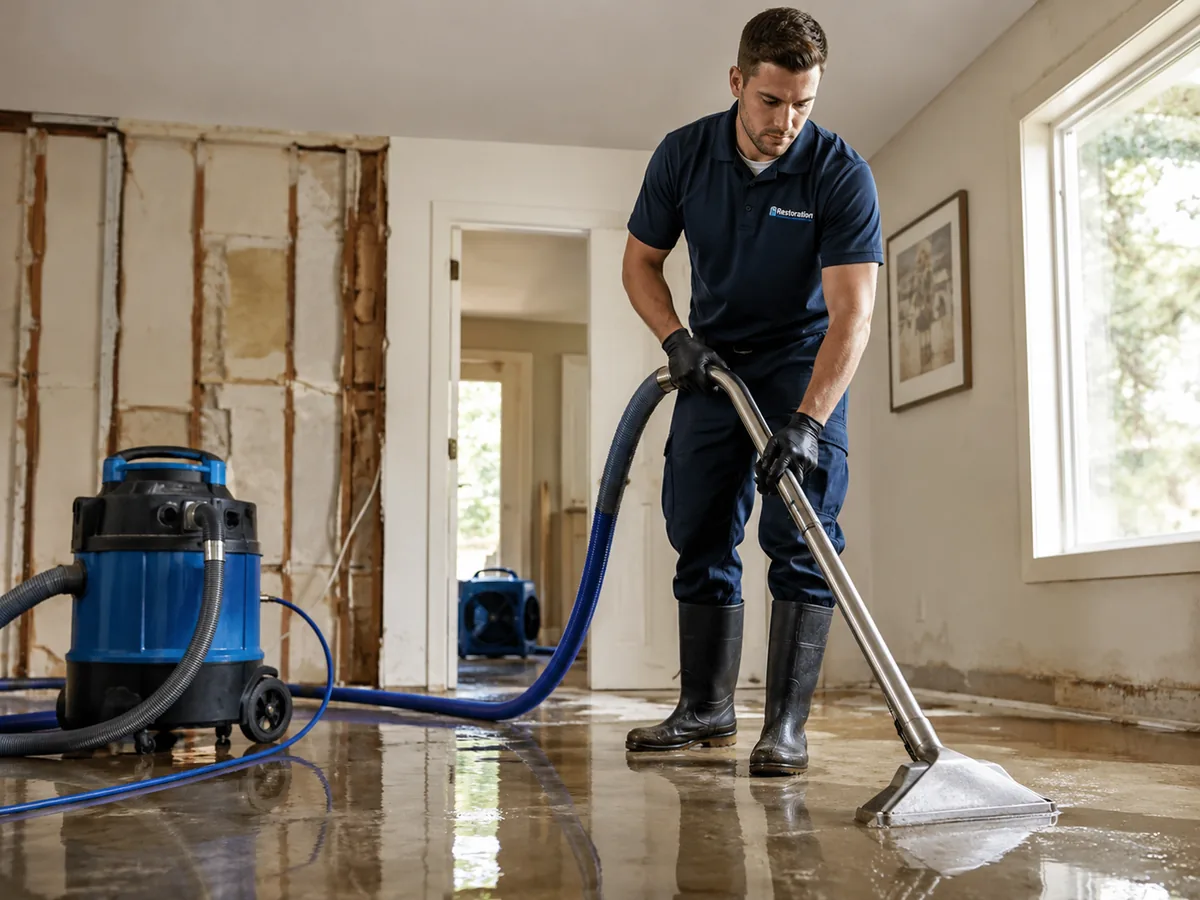
Emergency water damage restoration may involve removing water, controlling moisture, drying affected materials, cleaning damaged areas, and preparing the property for further restoration when needed.
Standing or excess water may need to be removed from affected rooms, flooring, and other wet areas.
Moisture levels may need to be assessed and controlled to help limit additional water damage.
Flooring, walls, ceilings, framing, and other materials may require drying and dehumidification.
Damaged or wet areas may require cleaning depending on the water source and affected materials.
Visible and less-visible moisture or material damage may need professional assessment before next steps are chosen.
After extraction, drying, and cleanup, additional restoration work may be considered based on the property condition.
Emergency water damage can begin in many ways. The right response depends on the source, how much water is present, which areas are affected, and whether there are safety or contamination concerns.
A sudden plumbing leak or burst pipe can affect flooring, walls, ceilings, and nearby materials.
Washing machines, dishwashers, refrigerators, water heaters, or similar sources may cause resulting water damage.
Heavy rain, storms, or exterior damage may allow water to affect walls, ceilings, floors, or other areas.
Standing water may collect after heavy rain, drainage issues, groundwater intrusion, flash flooding, or other water events.
Sewage or contaminated water requires extra caution and may need specialized cleanup depending on the situation.
Water may remain behind walls, under flooring, or in other less-visible areas after obvious water is gone.
Get help understanding which water damage service may fit your situation.
The exact restoration process depends on the source of water, affected materials, moisture levels, contamination concerns, and the condition of the property.
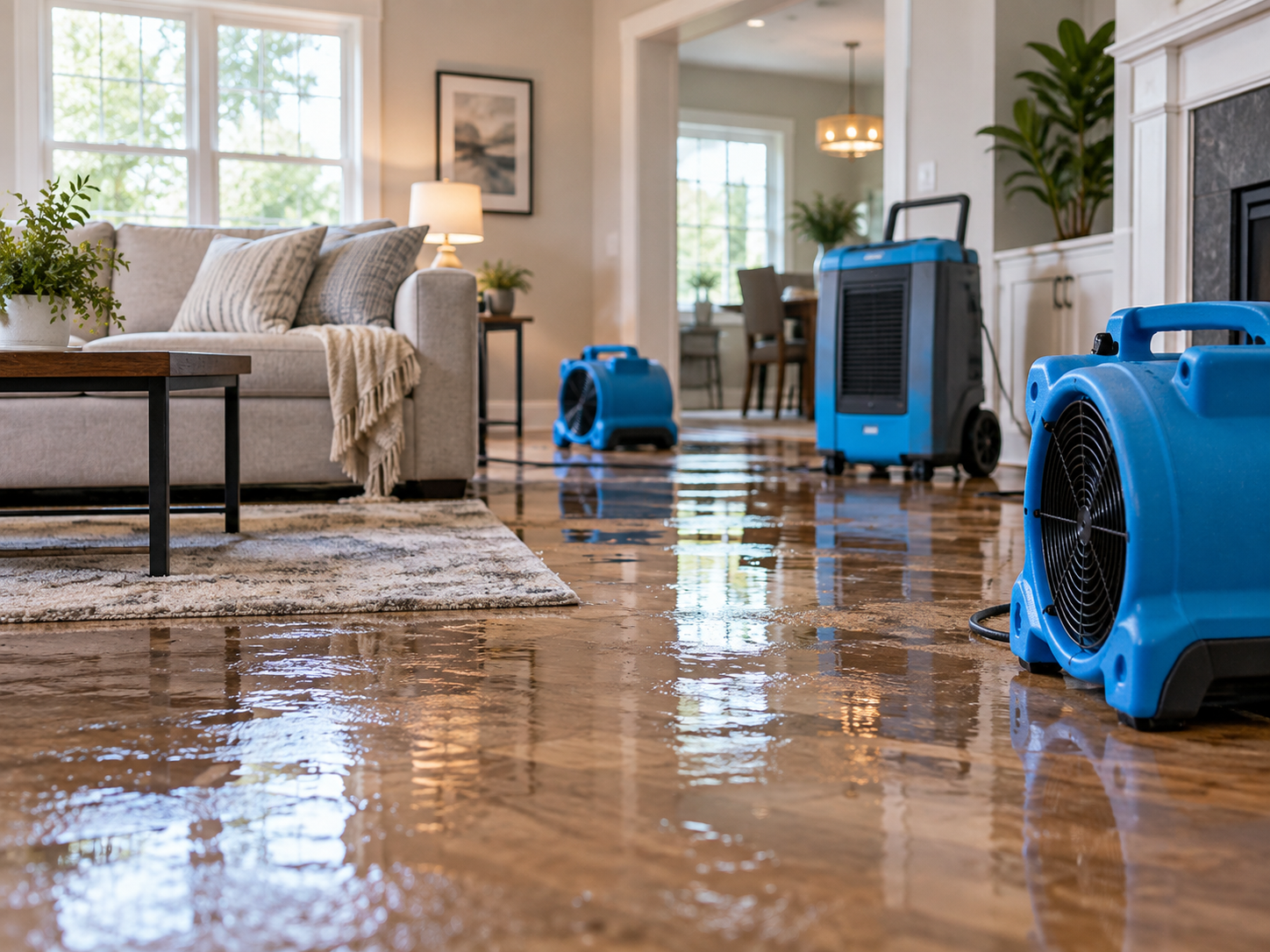
Visible damage, moisture, affected materials, and potential safety concerns may be evaluated before work begins.
Standing or excess water may need to be extracted from floors, rooms, basements, or other affected areas.
Air movement, dehumidification, and moisture monitoring may be used to help dry affected materials and spaces.
Cleanup needs depend on the water source, contamination level, materials involved, and condition of the affected area.
Once extraction, drying, and cleanup are addressed, damaged materials may be evaluated for additional restoration or replacement needs.
Water can continue affecting flooring, walls, furnishings, and other materials after the initial event. Safe, timely action may help limit additional damage and make the next steps easier to manage.
Stopping or containing ongoing water movement, if safe, may help reduce how far moisture reaches.
Standing water and trapped moisture may need extraction, drying, dehumidification, and moisture monitoring.
Flooring, drywall, cabinetry, furniture, and personal belongings may become harder to restore if moisture remains.
Water may remain behind walls, under flooring, or in other less visible areas and may require professional assessment.
Find answers about urgent water damage situations, restoration steps, service needs, and what to do next.
Emergency water damage restoration may involve water extraction, moisture control, drying, cleanup, damage assessment, and preparation for additional restoration depending on the situation.
Call (855) 317-2617 if you are dealing with standing water, flooding, sewage backup, major leaks, or another urgent water damage situation and need help understanding the next step.
Emergency water damage restoration may be needed for burst or leaking pipes, appliance water leaks, storm water intrusion, flooded basements, sewage backups, or hidden moisture after a leak.
The process may include assessment, water removal, drying and moisture control, cleanup, and preparation for further restoration depending on the situation.
Water can continue affecting flooring, walls, furnishings, and other materials. Timely action may help limit additional damage and make cleanup easier.
Call (855) 317-2617 or explore the Service Areas page to find water damage information for your location.
Compare independent provider options in your area. Free to call, no obligation.